
Why Nigerian Businesses Stop Growing When the Ads Stop
Ask a Nigerian business owner where last quarter's sales came from, and the answer is usually a promo, a boosted post, or an influencer deal. Ask where next quarter's sales will come from, and the answer is usually the next promo.
That is the real story behind why so many businesses spend steadily on marketing and stay roughly the same size. The spending is not wasted. It is doing only half of the work growth requires.
What the pattern looks like
A business runs a discount. Sales rise for two weeks, then settle back to where they started. So the business runs another discount, then pays for a boosted post, then tries an influencer. Each push works briefly. None of them builds on the last one.
This is not poor judgment. It comes from three pressures landing on Nigerian businesses at once: cash that has to prove itself this month, a marketing industry that sells what is easiest to measure, and a buying public that has learned to be careful about who it pays.
What brand cannot fix
We run a brand agency, so we will be clear about this first. The largest barriers to growth in Nigeria are not branding problems. The World Bank's Enterprise Survey named access to finance as the biggest challenge facing SMEs, and poor roads, unreliable power, and a weaker naira raise costs for everyone.
No identity system solves any of that. What brand does is different. It is one of the few growth levers a business controls fully, whatever the economy is doing. You cannot fix the grid. You can decide whether the market remembers you, trusts you, and recommends you.
Two kinds of marketing, two timelines
In 2013, researchers Les Binet and Peter Field studied close to a thousand effectiveness case studies from the UK's Institute of Practitioners in Advertising. They found that marketing does two separate jobs.
The first is sales activation: discounts, retargeting, direct-response ads. It produces a sharp lift that fades quickly. The second is brand building: becoming known, familiar, and trusted before someone needs you. It works more slowly, but its effect lasts and compounds.
The reason is simple. Brand building creates memories that persist, so each exposure builds on the last. Activation has no such memory, so every campaign starts again from the baseline. On average, consumer brands in the study grew best with about 60% of spend on brand and 40% on activation. For B2B companies, the balance shifted to about 46% brand and 54% activation, reflecting longer sales cycles.
A necessary caution: this research came from established, mostly UK brands. Nigerian SMEs should not copy the ratio. The principle still applies. A business that spends only on activation pays full price for every sale, every time.
Most of the market has gone the other way. By 2024, companies were putting 68.8% of spend into performance marketing and 31.2% into brand, with long-term effectiveness falling as a result. In Nigeria, where every naira is under pressure, the pull toward short-term results is stronger still.
Most of your buyers are not buying this week
One finding from B2B research changes how you should judge a campaign. At any moment, about 95% of potential business buyers are not in the market. They will need what you sell eventually, just not now.
So when a promo "doesn't work," it may simply have reached people who did not need you that week. They saw it and moved on. The question that decides your future sales is whether those people will remember you when the need arrives. A discount cannot answer that. A brand can.
In Nigeria, trust does the selling
Nigerian buyers have good reasons to be careful. Phishing, counterfeit products, and misleading promotions continue to hold back Nigerian e-commerce, and buyers have learned to check before they pay. They ask people they know. They read the comments. They look for proof that someone else has already been served well.
The research supports this. A study of telecom companies in South-East Nigeria found that trust had a strong positive relationship with word-of-mouth, social media advocacy, and customer testimonials. Other research shows that buyers weigh the number and credibility of reviews, not only whether they are positive.
We see this in our own client work. When Xavier Shelter came to us, they had no online presence. Their MD reports that since launch they have consistently recorded over 20 leads a week across calls, DMs, and inquiries without running a single ad. Legacy Culture's COO reports a real increase in industry conversations and inbound leads since their relaunch.
Neither result came from a campaign. Both came from a clear position, a consistent identity, and a digital experience that made the business easy to trust.
Where we land on this
We do not start a growth engagement by recommending more ad spend. We start with Narration: what the business actually stands for, and whether its website, social pages, and sales conversations say the same thing. Most growth problems we audit begin there. The business is inconsistent, so the market never builds a clear memory of it.
From there, the practical shifts are simple, and none of them requires a large budget.
Measure what compounds. Alongside sales from each promo, track repeat customers, the share of new customers who came through referral, and how many people contact you by name without seeing an ad. These numbers move slowly, and they tell you whether the business is getting easier to sell.
Stay consistent long enough to be remembered. Use the same name, look, tone, and core message everywhere. Most businesses change their look and message before customers have learned the first version.
Make proof visible. Ask satisfied customers for reviews. Turn finished work into short case studies that show the problem, what was done, and what changed. In a market that expects to be misled, visible evidence is the difference.
Keep the promos, but give them something to work with. Sales pushes still matter, especially when cash is tight. They work far better when the person seeing the offer already knows your name.
The businesses that pull ahead from here will not be the ones that ran the most promos. They will be the ones that built the trust those promos draw on.
A question worth sitting with: look at your last three months of marketing spend. How much of it will still be working for you a year from now? We would like to hear your answer, and what first made your best customers trust you.
Nova X Solutions is a brand strategy and experience agency. We build brands, and the websites, products, and systems that carry them, for businesses across Nigeria and beyond. Learn more at novaxhq.com.
Keep reading

Understanding the Digital Business Ecosystem: A Complete Guide
What a digital business ecosystem actually means, how it differs from a stack of disconnected tools, and why businesses built on connected infrastructure consistently outperform those that aren't
Read article
Why Business Software Integration Fails for Nigerian Companies
The forex problem is a symptom of a deeper one: most of these tools weren't designed with the Nigerian operating environment in view, and it shows beyond the price tag.
Read article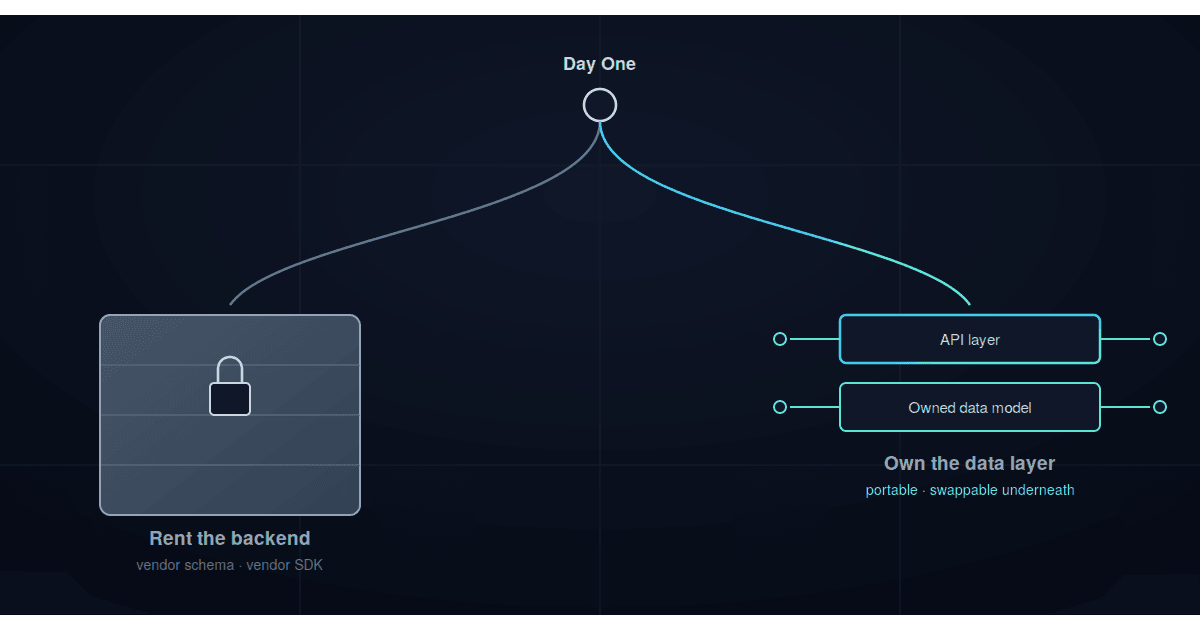
The Infrastructural Decision Every Business Should Make Early
Every growing business eventually hits the same fork: own your data and API layer, or keep renting it. Here's why this decision should be made on purpose, not by default.
Read article